
Introduction
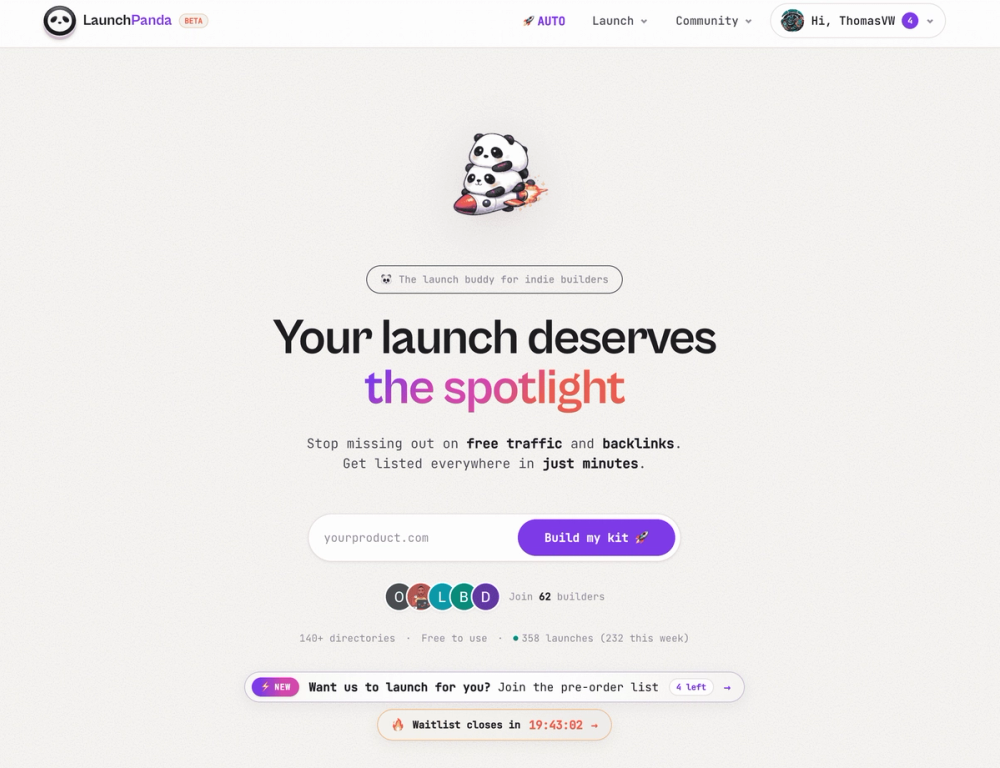
LaunchPanda is a launch roadmap and directory-submission tool for indie builders who want to promote a new product without repeatedly filling out the same submission forms. The public page presents it as a way to store product information once, find relevant launch directories, and copy details into the right places faster. It is unusually explicit about its product category: this is a directory and launch-support workflow, not a generic marketing tool.
Key Features
- Provides a curated launch roadmap for indie builders launching tools and startup products.
- Lists more than 156 directories, with 76 described as personally vetted.
- Helps users store product information once and reuse it across launch submissions.
- Matches products to relevant directories rather than making founders hunt manually.
- Shows directory signals such as free access, backlinks, audience, dofollow status, estimated timing, and submission difficulty.
- Includes completion tracking and a launch playbook built around the user's stage.
Use Cases
LaunchPanda is a practical fit for indie makers, solo founders, and small teams that have already built a product and now need a more organized launch process. The site addresses the repetitive work of finding directories, checking which ones are worth using, and pasting the same product information again and again.
The tool is especially relevant for builders who care about backlinks, free traffic opportunities, and launch visibility across product directories, startup directories, AI-tool directories, subreddits, and related communities. The public page shows examples of directory entries with signals such as dofollow status, audience, difficulty, and estimated time to listing, which can help users prioritize where to submit first.
LaunchPanda also appears useful for users who want different levels of help. The free DIY option is presented as a launch kit, directory database, and tracker, while the page also refers to Done-For-You launch bundles for founders who prefer to outsource more of the manual submission work. A buyer should still check the current plan details and what each paid tier includes before assuming the service will handle every submission channel.
Pricing
The visible pricing section includes a DIY option described as free forever at $0 forever, including the Launch Kit, directory database, and tracker. The source text also mentions Done-For-You launch bundles, including a 30-directory bundle, badge install support, being live within 7 days, and a 30-day refund policy. Another visible tier references 100+ directories and maximum DR coverage. Because the fetched page text is condensed, users should confirm the current paid prices, exact directory counts, turnaround expectations, refund terms, and whether any claims depend on badge installation or other requirements.
User Experience and Support
The page describes a three-step workflow: build your kit by plugging in product information, find your fit through matched directories, and copy and submit details to each directory. This suggests the core experience is designed around reducing repetitive form work rather than replacing the founder's launch strategy entirely.
Support signals are visible but should be interpreted carefully. The page mentions badge install support included in a Done-For-You bundle and invites directory or launch platform owners to collaborate. It also includes links such as Privacy Policy and Terms of Use. The public page does not provide a detailed help center or support SLA in the fetched evidence, so users buying a managed launch package should verify communication channels, responsibilities, and what happens if a directory rejects or delays a submission.
Technical Details
LaunchPanda's public page focuses more on workflow than technical stack. It shows a directory database with metadata such as domain rating relevance, backlink availability, audience, dofollow status, estimated listing time, and difficulty. It also includes a clipboard-oriented flow where users copy stored product information into external directory forms.
The site navigation references directories, subreddits, community, feed, leaderboard, and launches, which suggests a broader launch ecosystem around the directory database. The available evidence does not mention an API, browser extension, CRM integration, analytics integration, or automated submission mechanism. Users should verify whether submissions are manual copy-and-paste, assisted by the service team, or automated in any specific paid package.
Pros and Cons
Pros
- Clear fit for indie builders who need a structured product launch checklist.
- Directory database is presented with useful evaluation signals such as dofollow status, audience, estimated timing, and difficulty.
- Free DIY tier gives users access to a launch kit, directory database, and tracker according to the public page.
- The workflow addresses a real launch pain point: repeating the same product information across many forms.
- Done-For-You options may help founders who want to save manual submission time.
Cons
- The public page text is dense, so exact paid pricing and tier boundaries should be verified before purchase.
- Submission outcomes depend on third-party directories, so listing speed and acceptance are not fully controlled by LaunchPanda.
- Technical automation details are not fully explained in the fetched content.
- Users still need to provide accurate product positioning and assets for directory submissions to work well.
- Backlink and traffic value can vary by directory, so founders should treat ranking signals as guidance rather than predictable results.
FAQ
What is LaunchPanda?
LaunchPanda is a launch roadmap and directory-submission tool for indie builders. It helps users store product information, find suitable launch directories, and move through a structured copy-and-submit workflow.
Who is LaunchPanda best suited for?
LaunchPanda is best suited for indie makers, early-stage founders, and small teams that want to submit a product to multiple directories without spending hours researching and filling out forms manually. It is most relevant after a product is ready to be promoted publicly.
What can users clearly verify from the public site?
The page shows a directory database with more than 156 directories and 76 described as personally vetted. It also shows signals such as free access, backlink availability, dofollow status, estimated timing, and difficulty for sample directories.
Does LaunchPanda have a free plan?
Yes. The public page describes a DIY tier as free forever at $0 forever, including the Launch Kit, directory database, and tracker. Users should still confirm whether any features, directory counts, or tracking options differ between free and paid tiers.
What are the Done-For-You launch options?
The page refers to Done-For-You launch bundles, including a 30-directory option and another tier mentioning 100+ directories. It also references badge install support, a live-within-7-days statement, and a 30-day refund policy. Buyers should verify exact scope, pricing, and conditions before purchasing.
Does LaunchPanda automatically submit to every directory?
The visible workflow says users save, copy, and paste, and it describes opening a directory, pasting, and submitting. That suggests at least part of the DIY process is manual. Users should verify what, if anything, is automated and what is handled by LaunchPanda in paid Done-For-You plans.
What should founders check before using LaunchPanda for a launch?
Founders should check which directories are relevant to their product category, whether paid tiers include manual submission labor, how tracking works, and what happens when a directory rejects or delays a listing. They should also confirm current pricing and refund terms.
Conclusion
LaunchPanda offers a focused launch workflow for indie builders who want to submit products across directories without starting from a blank spreadsheet. Its strongest visible value is the combination of a vetted directory database, reusable product information, relevance matching, and submission tracking. It can make launch operations more organized, but users should still verify current plan details and remember that directory outcomes depend on third-party sites.