
LaunchStall is a weekly launch platform built for makers who want their products seen by an audience that is actively browsing new tools. Instead of an endless feed where launches disappear within hours, it organizes submissions into themed weekly cohorts with a limited number of slots, giving each product a clearer moment in the spotlight.
How the weekly format works
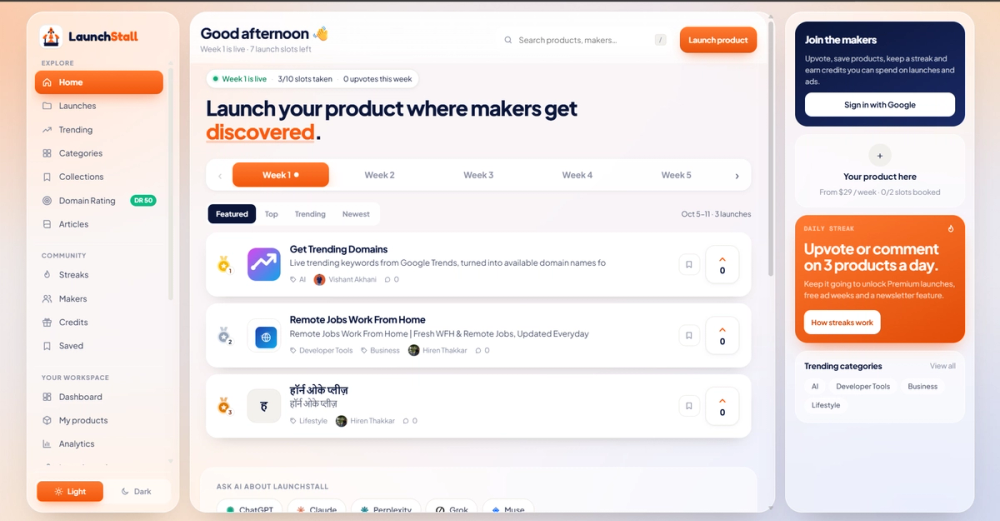
Each week opens a fresh batch of launch slots, and makers claim a spot before the window closes. A running counter shows how many positions remain, so participants know exactly how much visibility they are competing for. Products are then presented together on a single page, making it easy for visitors to scan the whole cohort and compare what is new.
What a listing includes
Every submission gets a dedicated product page with a name, a short pitch, and a link back to the product itself. Listings are grouped by category and credited to the maker behind them, so visitors can follow a creator whose work they like. The current cohort spans areas such as SEO, education, gaming, and productivity, which gives the platform a broad, cross-discipline feel rather than a single-niche focus.
Who it is for
LaunchStall suits indie developers, small teams, and solo founders who are shipping AI tools, apps, or utilities and want a lightweight way to announce them. It is also useful for people who enjoy browsing a curated set of fresh products each week instead of digging through generic directories. Because slots are limited, the experience stays focused and the competition for attention is transparent.
What makes it different
The limited-slot model is the core distinction. Rather than accepting unlimited submissions and letting the newest entries bury older ones, LaunchStall caps each week and rotates the cohort. That structure rewards timing and gives smaller makers a realistic shot at being noticed alongside more established names. The maker profile system adds a human layer, connecting each product to the person who built it.
Where it fits best
LaunchStall works well as a recurring checkpoint in a launch routine: submit when a product is ready, point your audience to the listing, and use the weekly cycle to build momentum. For makers who value a focused, time-boxed audience over a permanent listing, it offers a simple and repeatable way to get discovered.